

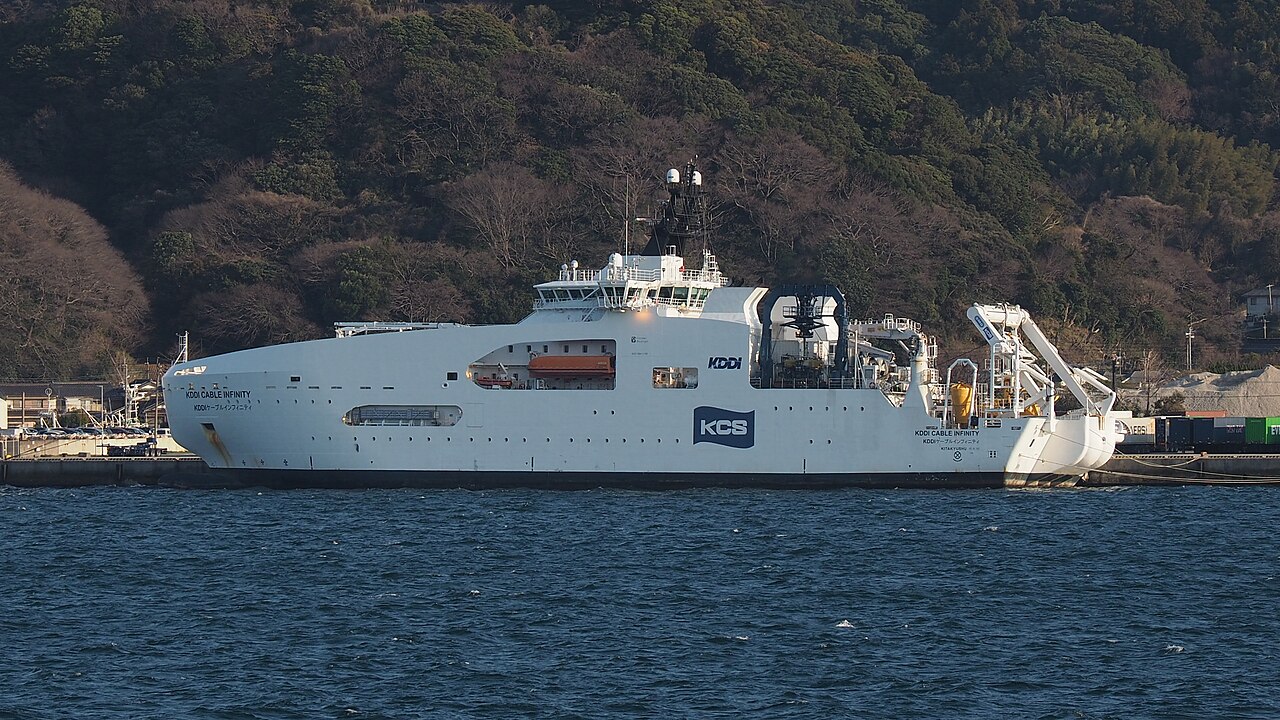
In the October 2026 issue of the IEEE Photonics Journal (Vol. 18, No. 5), researchers from KAUST published field test results for an optical-fiber-based integrated sensing and communication (O-ISAC) architecture. The engineering team achieved simultaneous data transmission and distributed acoustic sensing (DAS) within a single standard single-mode optical fiber core without mutual spectral interference.
Launching telecom traffic alongside phase-sensitive optical time-domain reflectometry (Phi-OTDR) interrogation pulses into the same fiber core typically triggers cross-phase modulation and optical noise. The researchers separated the signals in the spatial-spectral domain and deployed a convolutional neural network (CNN) demodulator to counter Rayleigh fading and turbulent marine noise. Field validation took place on a submerged cable laid across an active harbor canal. The system tracked the hydroacoustic signatures of vessels moving in opposing directions at speeds between 2.5 and 8.6 m/s while sustaining concurrent data transmission with 97.84% demodulation accuracy in laboratory trials and over 95% under dynamic marine conditions.
In our engineering practice at Ksense, underwater sections — telecom river crossings, pipeline river siphons, reservoir beds, coastal shelves, and port approaches — represent the most vulnerable segments of linear infrastructure. Unlike terrestrial routes, submerged corridors cannot be inspected by routine patrols. Anchor drags, fishing trawls, unauthorized dredging, or riverbed scouring can sever a line, leading to weeks of downtime and costly marine repair operations.
Laying a dedicated sensing cable underwater alongside an existing telecom line or pipeline is rarely cost-effective. Turning the operational submarine or river-crossing telecommunication cable itself into a continuous hydroacoustic array is a far more practical engineering solution.
At Ksense, we implement underwater monitoring either by connecting the K-DAS interrogator to a spare dark fiber inside the armored underwater cable or by isolating the sensing pulses from active DWDM traffic across separate spectral bands (Alien Wavelength). From a single shore-based rack, K-DAS monitors up to 65 km per single optical channel (up to 130 km across two arms) with a completely passive submerged fiber path. The system detects shallow-water vessel propulsion noise, anchor drops, dredging machinery vibrations, and free-spanning cable oscillations caused by seabed or riverbed washout, streaming event coordinates directly to SCADA and network management platforms via open protocols (OPC UA, Modbus TCP, REST API, and SNMP).